What is the SI joint?
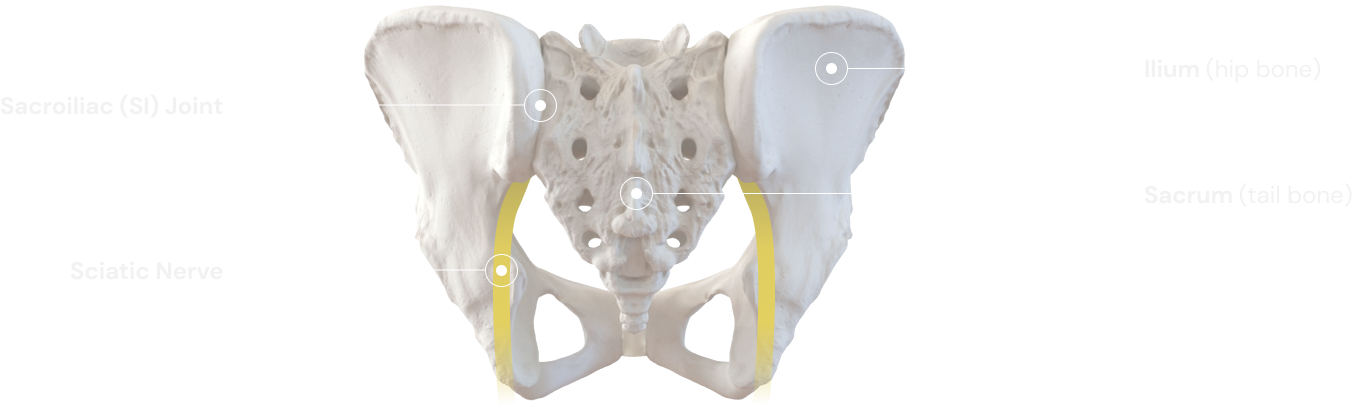
The sacroiliac joint sits just below the beltline, where the sacrum meets the ilium. When it becomes unstable, it can cause low back and leg pain.
The SI joint’s primary role is to provide stability and absorb shock for the spine and pelvis.
The sacroiliac joint or SI joint (SIJ) is the place where the sacrum and the ilium meet. It is located just below the beltline, on both the left and right side where the hip meets the tailbone. When unstable, this joint can cause low back and leg pain. The primary role of the SI joint is to provide stability and act as a shock absorber for the spine and pelvis. It bears the load of the upper body when you stand, sit, walk or jump before the forces reach your legs. It is an essential component for energy transfer from the legs and the torso.
What is SI joint dysfunction?
Sacroiliac joint dysfunction generally refers to pain in the sacroiliac joint region that is caused by abnormal motion in the sacroiliac joint, either too much or too little motion due to the lack of support from the once strong and taut ligaments. In fact, research suggests the SI joint is the source of pain up to 30 percent of people with chronic low back pain. (*Rashbaum, J Spinal Disord, 2016)
Common problems of the sacroiliac joint are often called sacroiliac joint dysfunction (also termed SI joint dysfunction; SIJD). Your physician may also refer to sacroiliac joint pain by other terms like sacroiliitis, SI joint degeneration, SI joint inflammation, SI joint syndrome, SI joint disruption, SI joint insufficiency, SI joint strain and arthritis.
Get more info from a representative in your area.
Request information and a representative in your area will personally reach out to you with more details.