Bone-based. Distraction.
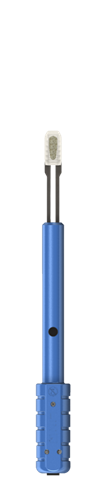
A structural cortical bone allograft placed posteriorly through a 1″ drill-less incision — office, ASC, or hospital. Designed to preserve bone architecture and anatomical integrity.
Get in touch
One drill-less approach that travels everywhere care happens — office, ASC, and OR. Backed by 17+ peer-reviewed publications.
Bone-based. Built to preserve.
Allo-TEQ is PainTEQ’s bone-based allograft portfolio for posterior SI joint procedures - two options, one drill-less approach, every clinical setting. Cortical bone, placed as bone, preserving anatomical integrity and leaving the treating physician full flexibility in long-term clinical planning.
Bone-based. Distraction.
A structural cortical bone allograft placed posteriorly through a 1″ drill-less incision — office, ASC, or hospital. Designed to preserve bone architecture and anatomical integrity.

Cortical piercing. Four-point.
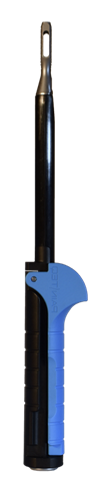
A cortical-piercing allograft engineered to engage the sacral and iliac cortices at four distinct points — delivered through the same drill-less posterior approach with one additional step.
Office, ASC, or hospital. LINQ® or TRAQ™. The posterior approach, the 1″ incision, and the patented drill-less methodology never change. Four universal steps — with PIERCE as the TRAQ™ +1.



of patients improved their ODI category from bed-bound, crippled, or severely disabled to moderate or minimal disability at 12 months.
Multicenter · randomized · open-label
200 subjects randomized 2:1 to LINQ® versus conservative medical management across 15 U.S. sites. Composite responder primary endpoint at 6 months; follow-up through 24 months.
Prospective · multicenter · post-market
Up to 100 subjects across 10 U.S. sites with 24-month follow-up — evaluating the real-world experience with TRAQ™.
Be the first to see the data as each study reads out.
Five checkpoints that define a documented SI joint pain candidate.
Educational summary of common SI joint patient selection criteria, not an FDA-cleared product indication. Coverage thresholds and documentation requirements vary by payer — refer to current LCD and payer policy. Patient selection remains the treating physician’s responsibility.
PainTEQ’s implants are placed intra-articular through a posterior, drill-less approach. The TRAQ™ design adds cortical piercing across the joint — mapping the two implants to two distinct CPT codes.
Arthrodesis, sacroiliac joint, percutaneous or minimally invasive, with image guidance, including obtaining bone graft when performed, unilateral; placement of intra-articular device(s), without cortical piercing.
Arthrodesis, sacroiliac joint, percutaneous or minimally invasive, with image guidance, including obtaining bone graft when performed, unilateral; placement of trans-articular device(s) and/or intra-articular device(s) piercing the lateral or medial cortices of the ilium and the lateral cortex of the sacrum.
An in-house team that scrubs, submits, and stays with the case — backed by a proprietary PAP portal designed to facilitate and expedite case processing.
Coding information is provided for educational purposes only. Coverage, coding, and payment are determined by individual payers and may vary by geography, plan, and patient. The treating physician is responsible for accurate coding and documentation. Refer to current CPT® guidelines and payer policy for definitive guidance. CPT® is a registered trademark of the American Medical Association.
"*" indicates required fields
We use cookies to improve your experience and analyse site traffic. By continuing to use our website, you consent to our use of cookies in accordance with our Privacy Policy.
Choose which cookies you allow. You can change your preferences at any time.
These cookies are required for the website to function. They cannot be disabled.
Help us understand how visitors use the site so we can improve the experience. Data is aggregated and anonymous.
Google Analytics (GA4)Used to deliver relevant advertising and track campaign performance across platforms.
LinkedIn Insight Tag & advertising trackers