The Missing Piece · A Patient Guide

The misSIng piece.

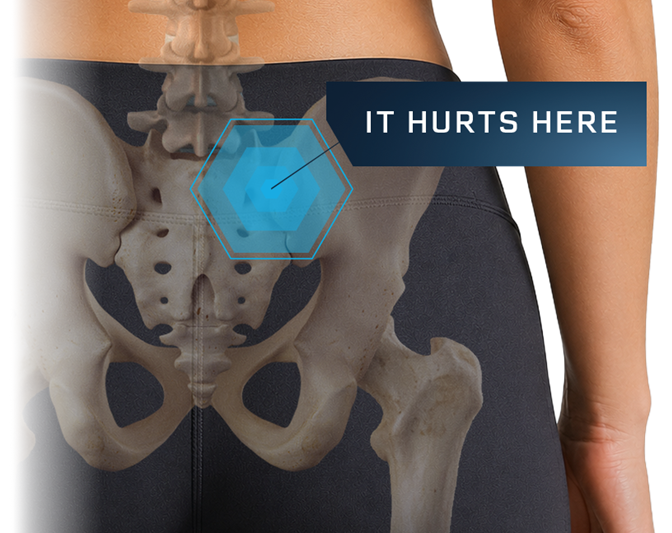
Your back pain may not be coming from your back. For many with stubborn low back or pelvic pain, the missing piece is the SI joint — a small joint just below the spine that’s easy to overlook. Find what’s missing. Find relief.
This site is for general education. It is not a diagnosis. Always talk with a qualified doctor about your specific symptoms.

Your SI joint

The joint that’s often
mistaken for the spine.

You have two SI joints — where the base of your spine meets your pelvis. Small joints with a big job: carrying your upper body into your legs as you move. When one is irritated, the pain is stubborn, one-sided, and easily mistaken for an ordinary back problem.

1 in 3

Up to 1 in 3 cases of chronic low back pain may actually come from the SI joint1 — and it is often overlooked.

1 Cohen SP. Anesth Analg, 2005 · DePalma MJ et al. Pain Med, 2011

Could this be your SI joint?

Tap any of these that sound familiar. This isn’t a diagnosis — it’s a way to see how your symptoms line up with the SI joint, then bring it up with your doctor.
0 / 7
Tap a few that match your experience.

You can tap as many as apply — we’ll suggest a next step once you do.

Take your next step

This tool is for general education. Only a doctor can tell you whether your SI joint is the cause of your pain.

A PainTEQ treatment

A small implant
built for the SI joint.

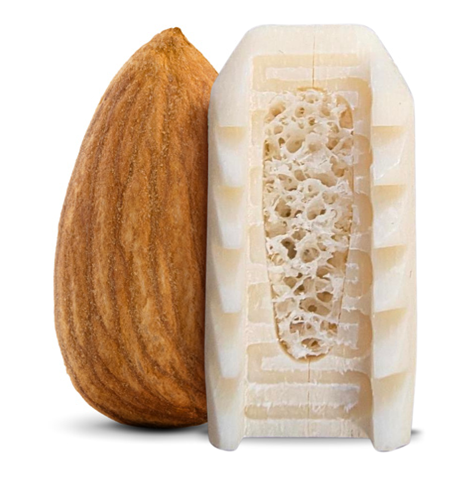
A PainTEQ bone implant photographed next to an almond — about the same size.
About the size of an almond. The implant is small enough to place through a single one-inch incision in your lower back. TRAQ™ shown
Where it goes.

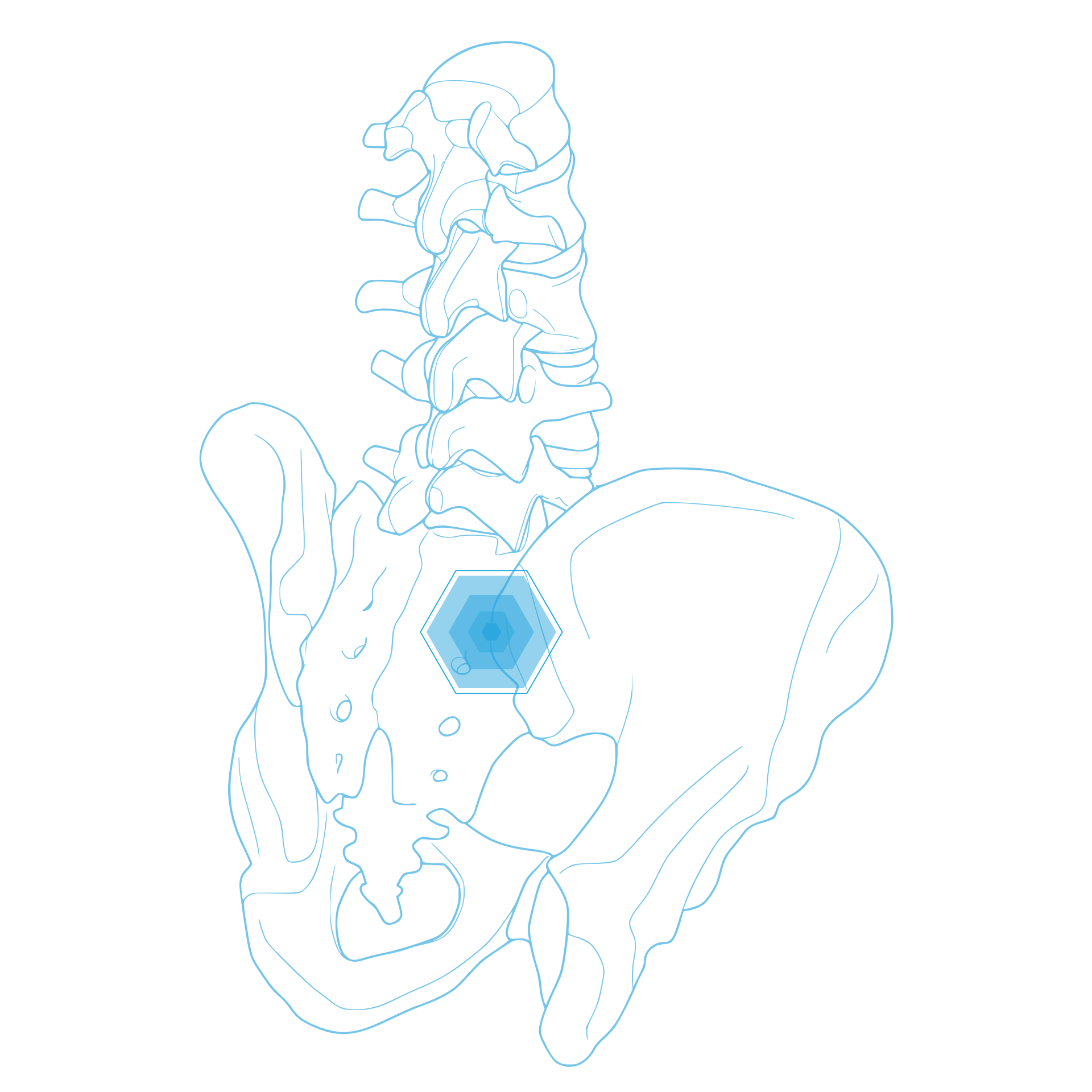
The implant is placed in the SI joint — low in your back, where the base of your spine meets your pelvis — through a single one-inch incision.
Same-day
An outpatient procedure — most patients go home the same day, with no overnight stay.
Safe
Low complication risk in published studies, with a strong safety profile across thousands of patients.2,3
Proven
Patients in published studies experienced an average of 67% pain relief after the procedure.4
Doesn’t close doors
Because the implant is bone-based and minimally invasive, larger fusion procedures stay available later if your care plan ever needs to change.

PainTEQ comes in two options — LINQ® and TRAQ™. You don’t need to choose: your doctor will recommend the right one for your anatomy, your history, and where your procedure is performed.

1 Cohen SP. Anesth Analg. 2005; DePalma MJ, et al. Pain Med. 2011.   2 Calodney A, Azeem N, Buchanan P, et al. Safety, Efficacy, and Durability of Outcomes: Results from SECURE. J Pain Res. 2024;17:1209–1222.   3 Bovinet C, Antony A, Azeem N, et al. Minimally Invasive Posterior SI Joint Fusion with a Novel Cortical Allograft. Orthop Res Rev. 2025;17:381–390.   4 Sayed D, et al. Multicenter retrospective analysis of LINQ® posterior SI joint fusion. J Pain Res. 2021.

The treatment journey

Where PainTEQ fits in.

Care for SI joint pain usually moves step by step. PainTEQ fills the gap between treatments that wear off and major surgery — the missing piece in the journey.

The treatment journey

Where PainTEQ fits in.

Care for SI joint pain usually moves step by step. PainTEQ fills the gap between treatments that wear off and major surgery — the missing piece in the journey.

What to expect

From your first visit
to getting back to life.

Step 01

Evaluation

You’ll talk through your symptoms, your history, what’s worked and what hasn’t — and your doctor examines how you move.
Allow about an hour
Step 02

SI joint testing

Simple physical tests, imaging, and usually two numbing injections confirm whether the SI joint is really the source of your pain — insurance plans typically expect this testing, too.
Often over a couple of visits
Step 03

Treatment discussion

If the SI joint is confirmed, you and your doctor talk through your options — and whether PainTEQ fits your anatomy and history.
You decide together
Step 04

The procedure

You’ll arrive, change, and meet your care team. The procedure itself is short, and you’ll head home the same day after a little while in recovery.
Plan for half a day
Step 05

Recovery

Most people start moving carefully right away and build up activity over the following weeks, with a specific plan from your doctor.
Several weeks — everyone is different
Your exact timeline depends on your doctor’s plan and your body. Always follow the instructions your care team gives you.

Real PainTEQ patients

In their own words.

In a clinical study, patients reported significant improvements in their ability to walk, work, sleep, and take part in the activities they love.1 Here, a few share their experience in their own words.
Brian S. testimonial Watch Video
“I am off pain pills now. I was on them for 6 years. It [PainTEQ] definitely helped me.”
Brian S. PainTEQ patient
Iva H. testimonial Watch Video
“I saw results right away. I just noticed that the pain was gone!”
Iva H. PainTEQ patient
Everett W. testimonial Watch Video
“It’s an amazingly simple solution. There’s no after-feeling, I just feel normal, and my pain was reduced by 85 or 90%.”
Everett W. PainTEQ patient

1 Calodney A et al. SECURE. J Pain Res, 2024. Testimonials reflect individual patient experiences and are not a promise of results. The SI joint may not be the source of every person’s pain. Your doctor can help determine whether any procedure is appropriate for you.

For your appointment

Walk in prepared.

Appointments are short. Jot down when the pain started, where it hurts, what makes it better or worse, and what you’ve already tried — then bring these questions with you.

Questions to ask your doctor

  1. 01Could my SI joint be the source of my pain?
  2. 02Have I been tested for SI joint dysfunction?
  3. 03Am I a candidate for a minimally invasive option like PainTEQ?
  4. 04What would recovery look like for me?
  5. 05Will my insurance cover the procedure?

Quick answers

Doctors typically combine movement tests and imaging with one or two diagnostic injections that numb the SI joint. If your pain improves significantly both times, that’s the clearest confirmation the joint is the source. A single positive injection is good evidence; a second with the same relief makes the picture much more certain — and insurance plans often require both.

The PainTEQ procedure is often performed under monitored sedation rather than general anesthesia, but the right choice for you depends on your doctor’s judgment, your health, and where the procedure is being done.

Most people go home the same day and gradually increase activity over the following weeks. Everyone is different. Your doctor will give you a specific plan and follow-up schedule.

PainTEQ implants are made of treated, sterile bone. They are placed into the SI joint to give your body something to heal around. PainTEQ comes in two options — LINQ® and TRAQ™ — and your doctor can answer specific questions about which is right for you and how the implant is sourced and processed.

As with any procedure, there are risks — including infection, bleeding, nerve irritation, and the possibility that the procedure may not fully relieve your pain. Your doctor will go through the specific risks with you and answer questions before you make a decision.

Something else on your mind?

Your next step

Talk to your doctor about
the missing piece.

If therapy and injections haven’t brought lasting relief, ask whether PainTEQ could complete your care. Leave your details and we’ll help you get the conversation started.
Worried about coverage? When your doctor submits to insurance, PainTEQ’s in-house Patient Access Program helps prepare the paperwork and stays involved through questions or appeals.

Find what’s missing.

Fill this out and a local team member will follow up. Fields marked * are required.

"*" indicates required fields

How can we help?