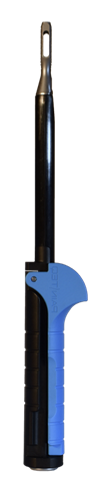
Posterior SI joint procedures.
Without the drill.

One drill-less approach that travels everywhere care happens — office, ASC, and OR. Backed by 17+ peer-reviewed publications.

The allograft portfolio

Allo-TEQ is PainTEQ’s bone-based allograft portfolio for posterior SI joint procedures - two options, one drill-less approach, every clinical setting. Cortical bone, placed as bone, preserving anatomical integrity and leaving the treating physician full flexibility in long-term clinical planning.

Allo-TEQ · LINQ®

Bone-based. Distraction.

A structural cortical bone allograft placed posteriorly through a 1″ drill-less incision — office, ASC, or hospital. Designed to preserve bone architecture and anatomical integrity.


Allo-TEQ · TRAQ™

Cortical piercing. Four-point.

A cortical-piercing allograft engineered to engage the sacral and iliac cortices at four distinct points — delivered through the same drill-less posterior approach with one additional step.

+1 PIERCE — one added step to engage the sacral and iliac cortices.
The foundation

One elegant approach.
Without the drill.

Office, ASC, or hospital. LINQ® or TRAQ™. The posterior approach, the 1″ incision, and the patented drill-less methodology never change. Four universal steps — with PIERCE as the TRAQ™ +1.


1
Posterior incision
A single 1-inch posterior incision — office, ASC, or hospital. The approach doesn’t change.
0
Drills used
A patented broach replaces the drill — preserving bone architecture and keeping future surgery a real option.
SUI
Single-use instruments
Dedicated, sterile, ready out of the box. No reprocessing, no deviations.
4+1
Procedural steps
Four universal steps - plus PIERCE on TRAQ™.
Single-use sterile instruments
One instrument per step · 4 + 1
Guide pin
Step 01
Access
Guide pin
Posterior approach through a 1″ incision sets the working trajectory.
LINQ® & TRAQ™
Dilator
Step 02
Dilate
Dilator
Atraumatic soft-tissue dilation exposes the SI joint.
LINQ® & TRAQ™
Decorticator
Step 03
Decorticate
Decorticator
Prepares the joint surface for fusion.
LINQ® & TRAQ™
Cortical broach
+1
Pierce
Cortical broach
Patented broach pierces sacral and iliac cortices.
TRAQ™ only
Implant inserter
Step 04
Deliver
Implant inserter
Seats the implant with the patented drill-less methodology.
LINQ® & TRAQ™
The data

Pain relief is the headline. Function is the proof.

PainTEQ’s clinical program spans prospective studies, real-world evidence, and cadaveric biomechanical testing. Results below are summarized from peer-reviewed publications; individual outcomes may vary.
Prospective · n=117 SECURE Study Calodney et al · Journal of Pain Research · 2024 Prospective, multicenter, single-arm study evaluating posterior SI joint fusion with LINQ\u00ae across multiple U.S. sites, with follow-up through 12 months.
Real-world · n=258 Real-World Evidence Bovinet et al · Orthopedic Research and Reviews · 2025 Retrospective real-world cohort study across multiple U.S. clinical sites, evaluating pain and functional outcomes following posterior SI joint fusion with LINQ® over an extended follow-up period.
Cadaveric · Biomechanics Biomechanics Sayed et al · Medical Devices: Evidence and Research · 2021 Cadaveric biomechanical study evaluating SI joint motion across all three planes following posterior implant placement.
Full clinical bibliographies, methodologies, and outcome tables available on request.
In progress · ongoing clinical program

Elevating the Evidence.

LINQ® · Landmark RCT Enrolling

LINQT RCT

Multicenter · randomized · open-label

200 subjects randomized 2:1 to LINQ® versus conservative medical management across 15 U.S. sites. Composite responder primary endpoint at 6 months; follow-up through 24 months.

NCT07558278
TRAQ™ · Post-market Enrolling

TRAQTION Study

Prospective · multicenter · post-market

Up to 100 subjects across 10 U.S. sites with 24-month follow-up — evaluating the real-world experience with TRAQ™.

NCT07547215
Patient selection

Who’s a candidate?

Five checkpoints that define a documented SI joint pain candidate.

01Conservative care

Failed conservative management.

  • Physical therapy
  • NSAIDs
  • IA SI injection
  • ≥ 6 months typical
02Imaging workup

MRI or CT of lumbar spine and SI joints, plus X-rays.

  • MRI/CT — Lumbar spine
  • MRI/CT — Sacroiliac joints
  • X-ray — AP pelvis
  • X-ray — Sacroiliac joints
03Physical exam

Positive Fortin’s + three of five SI maneuvers.

  • Fortin’s finger test
  • FABER (Patrick’s)
  • Gaenslen’s
  • Distraction
  • Thigh thrust
  • Compression
04The confirming step

Two image-guided, contrast-enhanced IA injections.

  • Two anesthetic durations
  • Separate visits
  • ≥ 75% pain reduction
05Therapeutic response

A therapeutic IA SI joint injection in the past 12 months.

  • Intra-articular corticosteroid (or equivalent)
  • Documented response
  • Within last 12 months

Educational summary of common SI joint patient selection criteria, not an FDA-cleared product indication. Coverage thresholds and documentation requirements vary by payer — refer to current LCD and payer policy. Patient selection remains the treating physician’s responsibility.

Reimbursement

Two codes.
Two distinct procedures.

PainTEQ’s implants are placed intra-articular through a posterior, drill-less approach. The TRAQ™ design adds cortical piercing across the joint — mapping the two implants to two distinct CPT codes.

2026 CPT · effective Jan 1, 2026
CPT Code · 2026
27278

Arthrodesis, sacroiliac joint, percutaneous or minimally invasive, with image guidance, including obtaining bone graft when performed, unilateral; placement of intra-articular device(s), without cortical piercing.

  • SettingOffice · ASC · OR
  • Cortical piercingNo — LINQ® does not pierce the cortices
CPT Code · 2026
27279

Arthrodesis, sacroiliac joint, percutaneous or minimally invasive, with image guidance, including obtaining bone graft when performed, unilateral; placement of trans-articular device(s) and/or intra-articular device(s) piercing the lateral or medial cortices of the ilium and the lateral cortex of the sacrum.

  • SettingASC · OR
  • Cortical piercingYes — TRAQ™ pierces the sacrum & ilium
Patient Access Program

Between your case
and the payer.

An in-house team that scrubs, submits, and stays with the case — backed by a proprietary PAP portal designed to facilitate and expedite case processing.

01
Pre-auth scrub
Case file reviewed against payer policy; gaps flagged.
02
Submission & tracking
Authorization submitted and tracked.
03
Appeal support
All appeal levels supported, drafted with clinical literature and payer-specific arguments.

Coding information is provided for educational purposes only. Coverage, coding, and payment are determined by individual payers and may vary by geography, plan, and patient. The treating physician is responsible for accurate coding and documentation. Refer to current CPT® guidelines and payer policy for definitive guidance. CPT® is a registered trademark of the American Medical Association.